
Everlasting Valve Company Inc -
  • Products
    • Boiler Blowdown Valves
    • Process Valves
    • Bulk Material Valves
    • Diverter Valves
    • Shop All Products
    • Guided Product Selector
  • Markets
    • View All Applications
    • Boilers
    • Power Generation
    • Cement Production
    • Petroleum Production
    • Petroleum Refining
    • Chemicals / Petrochemicals
    • Synthetic Fuels
    • Mining and Metals
  • Technology
    • Valve Technology
  • Resources
    • Document Finder
    • Case Studies
    • Technical Insights
    • Cross Reference
    • Compliance
  • About
    • Our Company
    • Trusted By…
    • News
    • Trade Shows
    • Careers
    • FAQ
  • Support
    • Contact
    • Warranty
    • Terms of Sale
908.769.0700
0

Valve Seat Lapping Machines: How They Work and Why It Matters

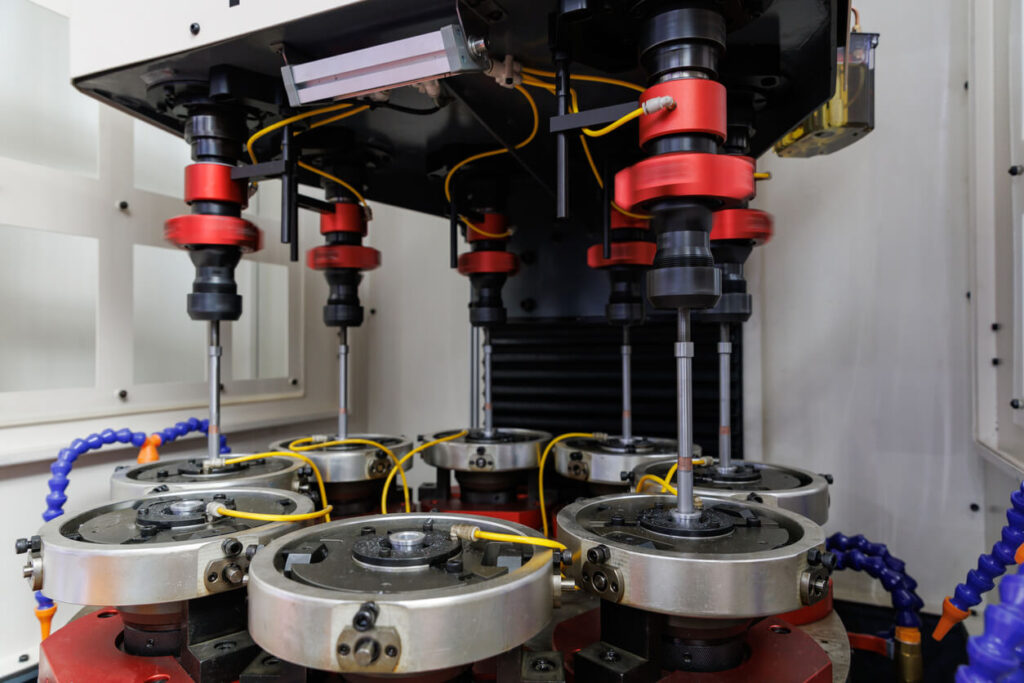
valve seat lapping machine
TABLE OF CONTENTS
  • Understanding the Sealing Surface Challenge
  • The Mechanics of Surface Restoration
  • Equipment Types and Capabilities
  • Process Steps for Optimal Results
  • Material Considerations and Techniques
  • Quality Verification and Acceptance Standards
  • Economic Benefits of In-House Capabilities
  • Integration with Comprehensive Valve Management

Precision sealing surfaces determine whether industrial valves perform reliably or become sources of leakage, process inefficiency, and safety concerns. The interface between valve seats and discs must achieve near-perfect contact to prevent fluid bypass, yet normal operation gradually degrades these critical surfaces. Maintaining optimal sealing performance requires specialized equipment designed to restore surface geometry and finish to exacting specifications.

Understanding the Sealing Surface Challenge

Industrial valves rely on precisely matched seating surfaces to create effective seals under various pressure and temperature conditions. Even microscopic irregularities, scratches, or corrosion pits can create leak paths that compromise valve function. As valves cycle through thousands of operations, mechanical wear, thermal stress, and process fluid erosion gradually degrade seating surfaces.

The consequences of deteriorated seating surfaces extend beyond simple leakage. In control valve applications, worn seats reduce throttling precision and create unstable flow characteristics. Safety and isolation valves lose their ability to provide reliable shutoff, potentially creating hazardous conditions. Process efficiency suffers as bypass flow increases, requiring higher pressure differentials or reduced throughput to maintain control.

Traditional repair methods often involve replacing entire valve internals or sending components to specialized machine shops for reconditioning. These approaches generate significant costs, extended downtime, and logistical complexity. The development of portable precision machining equipment offers maintenance teams alternatives that dramatically reduce both expenses and out-of-service time.

The Mechanics of Surface Restoration

Lapping represents a precision finishing process that removes minimal material while achieving extremely fine surface characteristics. Unlike grinding or milling operations that remove stock quickly, lapping uses fine abrasive compounds to gradually bring surfaces into proper geometry and finish. This controlled material removal allows restoration of sealing surfaces without altering critical dimensions beyond acceptable tolerances.

The basic process involves relative motion between the work surface and a lapping tool, with abrasive compound suspended between them. As the surfaces move against each other, the abrasive particles remove high spots and irregularities, progressively improving both flatness and surface finish. The lapping compound typically consists of precisely sized abrasive particles in a carrier fluid, with grit sizes selected based on the amount of material removal required and the desired final finish.

Professional equipment designed for valve maintenance incorporates several key features that ensure consistent, high-quality results. Precise speed control maintains optimal surface velocity for effective material removal without generating excessive heat. Adjustable pressure systems allow operators to regulate cutting force based on material hardness and surface condition. Compound delivery mechanisms ensure continuous supply of fresh abrasive to the working interface.

Equipment Types and Capabilities

Modern machinery for seat reconditioning comes in various configurations designed for different valve types, sizes, and field conditions. Portable units designed for on-site maintenance allow technicians to perform precision work without removing valves from service locations. These systems typically include self-contained power sources, integrated tooling, and all necessary accessories for complete seat restoration.

Bench-mounted equipment offers enhanced stability and precision for shop-based reconditioning operations. These machines often feature more robust construction, greater power capacity, and expanded tooling options compared to portable alternatives. Facilities that regularly recondition large numbers of valves may justify investment in dedicated shop equipment that maximizes throughput and consistency.

Key equipment capabilities include:

  • Universal mounting systems that accommodate various valve body configurations and sizes
  • Precision alignment mechanisms ensuring concentric material removal and proper seat geometry
  • Variable speed drives allowing optimization for different materials and surface conditions
  • Integrated measurement systems for verifying final dimensions and surface quality
  • Cooling and flushing capabilities to remove swarf and control temperature during machining

The most versatile systems support both lapping and grinding operations, giving technicians flexibility to address various reconditioning challenges. Light surface damage may only require fine lapping, while severely corroded or eroded seats might need grinding followed by progressively finer lapping to achieve the required finish.

Process Steps for Optimal Results

Successful seat restoration requires systematic approach that addresses surface preparation, material removal, and quality verification. Proper procedure execution significantly impacts both the immediate sealing performance and the longevity of the reconditioned surfaces.

The process typically follows this sequence:

  • Initial inspection and measurement to document existing condition and determine material removal requirements
  • Surface cleaning to remove deposits, corrosion products, and contaminants that could interfere with machining
  • Rough lapping or grinding to remove damage and establish basic geometry
  • Progressive fine lapping using increasingly finer compounds to achieve specified surface finish
  • Final inspection and verification confirming dimensions, geometry, and surface quality meet specifications
  • Cleaning and preservation preparing reconditioned components for reassembly or storage

Experienced technicians understand that patience and proper technique produce superior results compared to aggressive material removal. Attempting to accelerate the process by using excessive pressure or speed typically generates heat that can metallurgically damage surfaces, creates uneven material removal patterns, or produces unacceptable surface finishes.

Material Considerations and Techniques

Different valve seat materials require adapted lapping approaches to achieve optimal results. Soft materials like brass and bronze lap relatively quickly but demand careful pressure control to avoid excessive material removal or surface deformation. Stainless steels and exotic alloys resist material removal more effectively, requiring coarser initial abrasives and potentially longer processing times.

Hard-faced seats with stellite, tungsten carbide, or ceramic coatings present unique challenges. These extremely wear-resistant materials may require diamond abrasives and specialized techniques to restore surfaces effectively. In some cases, damage extending through hard-facing to base material necessitates complete resurfacing rather than simple lapping, potentially requiring more extensive machining or even component replacement.

Surface finish requirements vary based on valve service conditions and sealing system design. Metal-to-metal seats in high-temperature or abrasive service may specify relatively coarse finishes that promote initial break-in while maintaining basic sealing. Soft-seated valves require extremely smooth mating surfaces to prevent premature seal wear and optimize sealing performance.

Quality Verification and Acceptance Standards

Confirming that reconditioned surfaces meet specifications requires appropriate measurement and inspection methods. Visual inspection identifies obvious defects like remaining scratches, pitting, or uneven finish patterns. However, meeting demanding sealing requirements necessitates quantitative verification of critical parameters.

Surface finish measurement using profilometers documents roughness characteristics against specifications. Flatness assessment using precision straight edges or dial indicators confirms geometric accuracy. For critical applications, some facilities employ optical comparators or coordinate measuring machines to verify complex seat geometries.

Functional testing provides ultimate confirmation of reconditioning effectiveness. Hydrostatic seat testing under specified pressures demonstrates leak-tight performance before returning valves to service. This verification step identifies any remaining surface defects or dimensional issues that could compromise sealing, preventing expensive field failures.

Economic Benefits of In-House Capabilities

Organizations that invest in professional-grade seat reconditioning equipment often realize substantial economic returns through reduced maintenance costs and improved valve reliability. The ability to restore sealing surfaces in-house eliminates outsourcing expenses, shipping costs, and extended turnaround times associated with external machine shops.

More importantly, portable equipment enables on-site reconditioning that dramatically reduces downtime compared to valve removal and shop repair. For critical process valves, the ability to restore seating surfaces during scheduled maintenance windows rather than enduring unplanned outages delivers exceptional value. This capability proves especially valuable in remote locations where logistics complicate access to specialized services.

Beyond direct cost savings, in-house reconditioning capabilities support proactive maintenance strategies. Rather than waiting for valve performance to deteriorate to unacceptable levels, maintenance teams can implement condition-based reconditioning that addresses wear before it progresses to failure. This approach extends overall valve life while maintaining optimal performance throughout service intervals.

Integration with Comprehensive Valve Management

Equipment for precision seat reconditioning represents one component of comprehensive valve maintenance programs. Organizations that excel in valve reliability combine appropriate tooling with skilled technicians, documented procedures, and quality management systems that ensure consistent results.

Effective programs include regular training to maintain and enhance technician capabilities, detailed procedures that capture best practices and lessons learned, and quality control measures that verify reconditioning effectiveness. Documentation systems tracking valve history, reconditioning activities, and performance outcomes enable continuous improvement and informed asset management decisions.

The technology for restoring critical valve sealing surfaces has evolved dramatically, providing maintenance organizations with powerful tools for extending equipment life and improving reliability. Understanding how these systems work and implementing them effectively delivers measurable benefits through reduced costs, improved performance, and enhanced operational flexibility.

Contact us today to request a quote or speak with an expert!

BACK TO NEWS

Stop replacing valves. Start solving the problem.

Built to support faster RFQs, stronger conversations, and a better application selling across severe-service markets.

"*" indicates required fields

Step 1 of 9

11%
This field is for validation purposes and should be left unchanged.
Select Your Valve Style(s) of Interest*
Image for choice number 1
Image for choice number 2
Image for choice number 3
Everlasting Valve Company

Project Information

Budgetary Pricing*

Valve Inquiry

Please complete this form section with as much detail to enable a quicker quote turnaround.
Body Material
For Reference
Shell/Seat Test

Process Valve Information

Please complete this form section with as much detail to enable a quicker quote turnaround.
Delta P
Differential pressure to calculate actuator sizing
Valve disc configuration
Close on Static Column of Material

Operator Requirements

Please complete this form section with as much detail to enable a quicker quote turnaround.
If pneumatic actuator equipped

Accessories Requirements

Please complete this form section with as much detail to enable a quicker quote turnaround.

Valve Paint Requirements

Please complete this form section with as much detail to enable a quicker quote turnaround.
Paint

Valve Testing or Certification Requirements

Please complete this form section with as much detail to enable a quicker quote turnaround.
Testing or Certification Requirements
Additional Comments
Max. file size: 256 MB.

Boiler Valves

Use the dropdowns to narrow down to a specific boiler valve, then add it to your list below.

Boiler Valve Search

Reset
4000A-1.00
4000A-1.00
Quick (Lever) - 1.00 - Iron 250 - Screw End
4000A-1.25
4000A-1.25
Quick (Lever) - 1.25 - Iron 250 - Screw End
4000A-1.50
4000A-1.50
Quick (Lever) - 1.50 - Iron 250 - Screw End
4000A-2.00
4000A-2.00
Quick (Lever) - 2.00 - Iron 250 - Screw End
4000A-2.50
4000A-2.50
Quick (Lever) - 2.50 - Iron 250 - Screw End
4000S(57)-1.00
4000S(57)-1.00
Quick (Lever) - 1.00 - Carbon Steel 300 - Screw End
4000S(57)-1.25
4000S(57)-1.25
Quick (Lever) - 1.25 - Carbon Steel 300 - Screw End
4000S(57)-1.50
4000S(57)-1.50
Quick (Lever) - 1.50 - Carbon Steel 300 - Screw End
4000S(57)-2.00
4000S(57)-2.00
Quick (Lever) - 2.00 - Carbon Steel 300 - Screw End
4000S(57)-2.50
4000S(57)-2.50
Quick (Lever) - 2.50 - Carbon Steel 300 - Screw End
4000S(58)-1.00
4000S(58)-1.00
Quick (Lever) - 1.00 - Carbon Steel 600 - Screw End
4000S(58)-1.25
4000S(58)-1.25
Quick (Lever) - 1.25 - Carbon Steel 600 - Screw End
4000S(58)-1.50
4000S(58)-1.50
Quick (Lever) - 1.50 - Carbon Steel 600 - Screw End
4000S(58)-2.00
4000S(58)-2.00
Quick (Lever) - 2.00 - Carbon Steel 600 - Screw End
4000S(58)-2.50
4000S(58)-2.50
Quick (Lever) - 2.50 - Carbon Steel 600 - Screw End
4001A-1.00
4001A-1.00
Quick (Lever) - 1.00 - Iron 250 - Flanged
4001A-1.25
4001A-1.25
Quick (Lever) - 1.25 - Iron 250 - Flanged
4001A-1.50
4001A-1.50
Quick (Lever) - 1.50 - Iron 250 - Flanged
4001A-2.00
4001A-2.00
Quick (Lever) - 2.00 - Iron 250 - Flanged
4001A-2.50
4001A-2.50
Quick (Lever) - 2.50 - Iron 250 - Flanged
4001S(57)-1.00
4001S(57)-1.00
Quick (Lever) - 1.00 - Carbon Steel 300 - Flanged
4001S(57)-1.25
4001S(57)-1.25
Quick (Lever) - 1.25 - Carbon Steel 300 - Flanged
4001S(57)-1.50
4001S(57)-1.50
Quick (Lever) - 1.50 - Carbon Steel 300 - Flanged
4001S(57)-2.00
4001S(57)-2.00
Quick (Lever) - 2.00 - Carbon Steel 300 - Flanged
4001S(57)-2.50
4001S(57)-2.50
Quick (Lever) - 2.50 - Carbon Steel 300 - Flanged
4001S(58)-1.00
4001S(58)-1.00
Quick (Lever) - 1.00 - Carbon Steel 600 - Flanged
4001S(58)-1.25
4001S(58)-1.25
Quick (Lever) - 1.25 - Carbon Steel 600 - Flanged
4001S(58)-1.50
4001S(58)-1.50
Quick (Lever) - 1.50 - Carbon Steel 600 - Flanged
4001S(58)-2.00
4001S(58)-2.00
Quick (Lever) - 2.00 - Carbon Steel 600 - Flanged
4001S(58)-2.50
4001S(58)-2.50
Quick (Lever) - 2.50 - Carbon Steel 600 - Flanged
4060A-1.00
4060A-1.00
Slow (Wheel) - 1.00 - Iron 250 - Screw End
4060A-1.25
4060A-1.25
Slow (Wheel) - 1.25 - Iron 250 - Screw End
4060A-1.50
4060A-1.50
Slow (Wheel) - 1.50 - Iron 250 - Screw End
4060A-2.00
4060A-2.00
Slow (Wheel) - 2.00 - Iron 250 - Screw End
4060A-2.50
4060A-2.50
Slow (Wheel) - 2.50 - Iron 250 - Screw End
4060S(57)-1.00
4060S(57)-1.00
Slow (Wheel) - 1.00 - Carbon Steel 300 - Screw End
4060S(57)-1.25
4060S(57)-1.25
Slow (Wheel) - 1.25 - Carbon Steel 300 - Screw End
4060S(57)-1.50
4060S(57)-1.50
Slow (Wheel) - 1.50 - Carbon Steel 300 - Screw End
4060S(57)-2.00
4060S(57)-2.00
Slow (Wheel) - 2.00 - Carbon Steel 300 - Screw End
4060S(57)-2.50
4060S(57)-2.50
Slow (Wheel) - 2.50 - Carbon Steel 300 - Screw End
4060S(58)-1.00
4060S(58)-1.00
Slow (Wheel) - 1.00 - Carbon Steel 600 - Screw End
4060S(58)-1.25
4060S(58)-1.25
Slow (Wheel) - 1.25 - Carbon Steel 600 - Screw End
4060S(58)-1.50
4060S(58)-1.50
Slow (Wheel) - 1.50 - Carbon Steel 600 - Screw End
4060S(58)-2.00
4060S(58)-2.00
Slow (Wheel) - 2.00 - Carbon Steel 600 - Screw End
4060S(58)-2.50
4060S(58)-2.50
Slow (Wheel) - 2.50 - Carbon Steel 600 - Screw End
4061A-1.50
4061A-1.50
Slow (Wheel) - 1.50 - Iron 250 - Flanged
4061A-2.00
4061A-2.00
Slow (Wheel) - 2.00 - Iron 250 - Flanged
4061A-2.50
4061A-2.50
Slow (Wheel) - 2.50 - Iron 250 - Flanged
4061S(57)-1.00
4061S(57)-1.00
Slow (Wheel) - 1.00 - Carbon Steel 300 - Flanged
4061S(57)-1.25
4061S(57)-1.25
Slow (Wheel) - 1.25 - Carbon Steel 300 - Flanged
4061S(57)-1.50
4061S(57)-1.50
Slow (Wheel) - 1.50 - Carbon Steel 300 - Flanged
4061S(57)-2.00
4061S(57)-2.00
Slow (Wheel) - 2.00 - Carbon Steel 300 - Flanged
4061S(57)-2.50
4061S(57)-2.50
Slow (Wheel) - 2.50 - Carbon Steel 300 - Flanged
4061S(58)-1.00
4061S(58)-1.00
Slow (Wheel) - 1.00 - Carbon Steel 600 - Flanged
4061S(58)-1.25
4061S(58)-1.25
Slow (Wheel) - 1.25 - Carbon Steel 600 - Flanged
4061S(58)-1.50
4061S(58)-1.50
Slow (Wheel) - 1.50 - Carbon Steel 600 - Flanged
4061S(58)-2.00
4061S(58)-2.00
Slow (Wheel) - 2.00 - Carbon Steel 600 - Flanged
4061S(58)-2.50
4061S(58)-2.50
Slow (Wheel) - 2.50 - Carbon Steel 600 - Flanged
B6561-1.50
B6561-1.50
Angle - 1.50 - Iron 250 - Flanged
B6561-2.00
B6561-2.00
Angle - 2.00 - Iron 250 - Flanged
B6561-2.50
B6561-2.50
Angle - 2.50 - Iron 250 - Flanged
B6571-1.50
B6571-1.50
Wye - 1.50 - Iron 250 - Flanged
B6571-2.00
B6571-2.00
Wye - 2.00 - Iron 250 - Flanged
B6571-2.50
B6571-2.50
Wye - 2.50 - Iron 250 - Flanged
B6661-1.50
B6661-1.50
Angle - 1.50 - Carbon Steel 300 - Flanged
B6661-2.00
B6661-2.00
Angle - 2.00 - Carbon Steel 300 - Flanged
B6661-2.50
B6661-2.50
Angle - 2.50 - Carbon Steel 300 - Flanged
B6671-1.50
B6671-1.50
Wye - 1.50 - Carbon Steel 300 - Flanged
B6671-2.00
B6671-2.00
Wye - 2.00 - Carbon Steel 300 - Flanged
B6671-2.50
B6671-2.50
Wye - 2.50 - Carbon Steel 300 - Flanged
B6761-1.50
B6761-1.50
Angle - 1.50 - Carbon Steel 600 - Flanged
B6761-2.00
B6761-2.00
Angle - 2.00 - Carbon Steel 600 - Flanged
B6771-1.50
B6771-1.50
Wye - 1.50 - Carbon Steel 600 - Flanged
B6771-2.00
B6771-2.00
Wye - 2.00 - Carbon Steel 600 - Flanged
B6771-2.50
B6771-2.50
Wye - 2.50 - Carbon Steel 600 - Flanged
Quote List

Contact Information

Max. file size: 256 MB.
Accepted file types: jpg, jpeg, png, gif.
Everlasting Valve Company Inc -
  • About
  • Valve Technology
  • Document Finder
  • FAQ
  • News
  • Trade Shows
Decorative: Image
Everlasting Valve Company Inc
108 Somogyi Court
South Plainfield, NJ 07080
Decorative: Image908.769.0700
Decorative: Imageinfo@evcousa.com
© 2026 All Rights Reserved. Everlasting Valve Company Inc
  • Privacy Policy
  • Disclaimer
  • Cookie Policy
  • Privacy Statement

This website uses Google Translate for translations. Automated translations may not be accurate, and the original language version should be considered authoritative.

Customer Satisfaction Survey

54321N/A
54321N/A
54321N/A
54321N/A
54321N/A
54321N/A
54321N/A
54321N/A
54321N/A
54321N/A
Feedback
Manage Consent
To provide the best experiences, we use technologies like cookies to store and/or access device information. Consenting to these technologies will allow us to process data such as browsing behavior or unique IDs on this site. Not consenting or withdrawing consent, may adversely affect certain features and functions.
Functional Always active
The technical storage or access is strictly necessary for the legitimate purpose of enabling the use of a specific service explicitly requested by the subscriber or user, or for the sole purpose of carrying out the transmission of a communication over an electronic communications network.
Preferences
The technical storage or access is necessary for the legitimate purpose of storing preferences that are not requested by the subscriber or user.
Statistics
The technical storage or access that is used exclusively for statistical purposes. The technical storage or access that is used exclusively for anonymous statistical purposes. Without a subpoena, voluntary compliance on the part of your Internet Service Provider, or additional records from a third party, information stored or retrieved for this purpose alone cannot usually be used to identify you.
Marketing
The technical storage or access is required to create user profiles to send advertising, or to track the user on a website or across several websites for similar marketing purposes.
  • Manage options
  • Manage services
  • Manage {vendor_count} vendors
  • Read more about these purposes
View preferences
  • {title}
  • {title}
  • {title}
Manage Consent
To provide the best experiences, we use technologies like cookies to store and/or access device information. Consenting to these technologies will allow us to process data such as browsing behavior or unique IDs on this site. Not consenting or withdrawing consent, may adversely affect certain features and functions.
Functional Always active
The technical storage or access is strictly necessary for the legitimate purpose of enabling the use of a specific service explicitly requested by the subscriber or user, or for the sole purpose of carrying out the transmission of a communication over an electronic communications network.
Preferences
The technical storage or access is necessary for the legitimate purpose of storing preferences that are not requested by the subscriber or user.
Statistics
The technical storage or access that is used exclusively for statistical purposes. The technical storage or access that is used exclusively for anonymous statistical purposes. Without a subpoena, voluntary compliance on the part of your Internet Service Provider, or additional records from a third party, information stored or retrieved for this purpose alone cannot usually be used to identify you.
Marketing
The technical storage or access is required to create user profiles to send advertising, or to track the user on a website or across several websites for similar marketing purposes.
  • Manage options
  • Manage services
  • Manage {vendor_count} vendors
  • Read more about these purposes
View preferences
  • {title}
  • {title}
  • {title}