
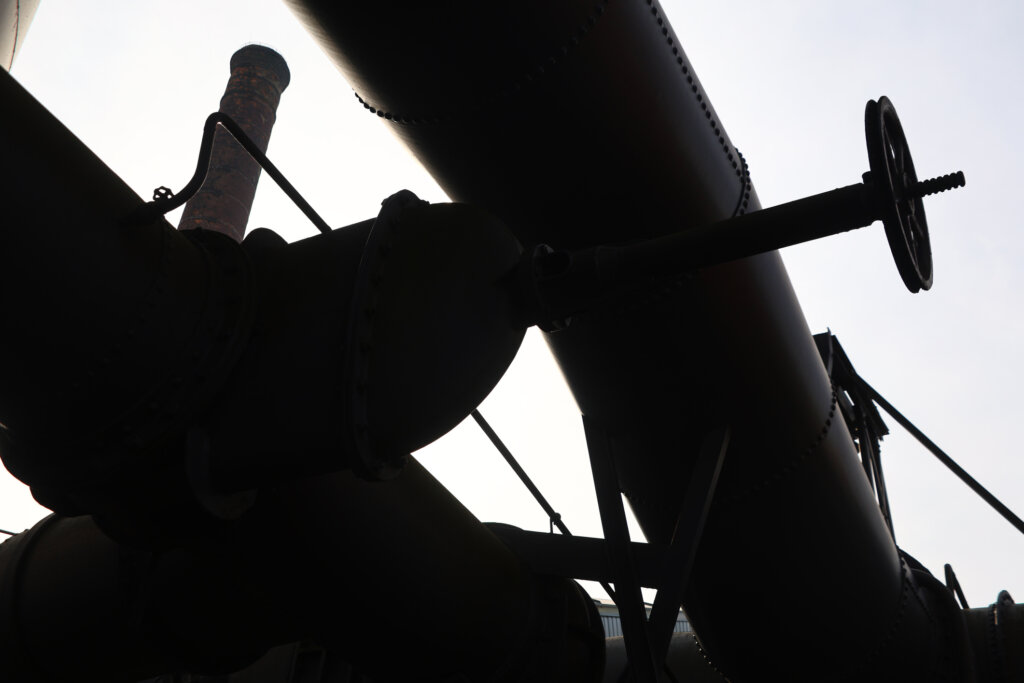
- Understanding the Blast Furnace Operating Environment
- BOF Converter Gas Characteristics
- Critical Design Features for Dust-Laden Service
- Managing Extreme Temperature Conditions
- Material Selection for Steel Production Environments
- Converter Gas Isolation and Safety
- Maintenance Strategies for Extended Service Life
- Optimizing Valve Selection for Steel Production
- Frequently Asked Questions
- Frequently Asked Questions
Key Takeaways
- Steel production valves must withstand extreme temperatures above 1,800°F, heavy particulate loading, and rapid thermal cycling that eliminate many conventional designs.
- Streamlined flow paths with self-cleaning seats are essential to prevent dust accumulation and maintain sealing integrity in blast furnace top gas and converter gas applications.
- Extended bonnet designs protect packing and actuators from temperature extremes while creating thermal gradients that prevent seal degradation and maintain accessibility.
- Material selection requires chrome-moly alloys or stainless steels with appropriate hard-facing to resist combined effects of heat, erosion, and oxidation in steel production environments.
- Emergency isolation capability with fail-safe actuation and low-emission sealing systems are critical safety requirements for explosive converter gas applications.
Steel production facilities present some of the most challenging environments for valve equipment in industrial operations. Blast furnaces and Basic Oxygen Furnaces (BOFs) expose valves to extreme temperatures, abrasive particulates, and corrosive gases that can rapidly degrade conventional equipment. Understanding the unique demands of these applications is essential for selecting valves that deliver reliable performance and extended service life in ironmaking and steelmaking operations.
Understanding the Blast Furnace Operating Environment
Blast furnaces produce molten iron through the reduction of iron ore using coke and hot air blast. This continuous process generates several gas streams that require isolation and control, including top gas at temperatures up to 400°F containing significant dust loading, and hot blast air at temperatures exceeding 2,000°F. The dust-laden nature of these streams creates severe erosion potential that eliminates many standard valve designs from consideration.
Top gas from blast furnaces contains iron ore fines, coke particles, and alkali compounds that accumulate on valve internal surfaces, interfering with seating and causing premature wear. This gas stream, while valuable for its fuel content, must be cleaned before use in downstream processes. Valves handling raw top gas require designs that resist plugging and accommodate heavy particulate loading without losing sealing capability.
The hot blast system introduces different challenges. Temperatures in this service regularly exceed 1,800°F, requiring specialized materials and design features to maintain structural integrity. Thermal expansion becomes a critical consideration, with careful attention needed to prevent binding, seal degradation, and joint leakage throughout the extreme temperature range.
BOF Converter Gas Characteristics
Basic Oxygen Furnaces convert molten iron into steel through controlled oxidation, producing converter gas streams rich in carbon monoxide and containing entrained dust from the steelmaking process. These gases exit the converter at temperatures approaching 3,000°F before cooling and treatment, creating an environment that pushes valve materials and designs to their limits.
Key BOF Gas Stream Challenges:
- Extremely high initial temperatures requiring substantial cooling before valve exposure
- Dense particulate loading from iron oxide and other process materials
- Rapid temperature fluctuations during charging and oxygen blowing cycles
- Presence of carbon monoxide requiring explosion-proof designs in certain locations
- Intermittent flow patterns that can allow material buildup during idle periods
Converter gas recovery systems capture this valuable fuel source for use in plant heating and power generation. Valves in these systems must maintain tight shutoff to prevent explosive gas mixtures while accommodating the thermal cycling and dust loading inherent to BOF operations. Emergency isolation capability becomes critical, as converter gas leaks present serious safety hazards.
Critical Design Features for Dust-Laden Service
Particulate-laden gas streams in steel production require valve designs fundamentally different from clean service applications. Conventional gate valves with wedge-and-seat designs create pockets where dust accumulates, leading to binding and seal failure. Globe valves with tortuous flow paths experience rapid erosion and plugging from abrasive particles.
Blast furnace valves with streamlined flow geometry and self-cleaning seat designs provide superior performance in these demanding applications. Rotating disc valves, in particular, offer significant advantages through their quarter-turn operation and continuous wiping action that prevents dust accumulation on sealing surfaces. The full-port design minimizes pressure drop while reducing erosion from high-velocity particulates.
Essential Features for Particulate Service:
- Streamlined flow paths without internal pockets or cavities
- Replaceable hard-faced seats and sealing surfaces
- Full-bore or reduced trim designs to minimize velocity-induced erosion
- Provisions for steam or air purging to prevent material buildup
- Access ports for inspection and cleaning without complete valve removal
Seat design becomes particularly critical in dust-laden applications. Metal-to-metal seats with renewable hard-facing can tolerate particulate intrusion better than soft-seated designs, while maintaining adequate shutoff for process control. The selection of hard-facing material must balance wear resistance with the ability to embed small particles without galling or seizing.
Managing Extreme Temperature Conditions
The temperature extremes encountered in ironmaking and steelmaking operations demand specialized approaches to valve design and material selection. Hot blast valves operating continuously above 1,800°F require cast high-alloy bodies, extended bonnets to protect actuators and seals, and sophisticated cooling systems to maintain packing integrity.
Thermal cycling in BOF applications creates additional complexity. Valves may experience temperature swings of 1,000°F or more during charging, blowing, and tapping sequences. This rapid cycling induces thermal fatigue stresses that can lead to cracking in improperly designed equipment. Cast bodies with controlled cooling rates during manufacturing develop microstructures better suited to withstand these cyclic loads compared to fabricated alternatives.
Extended bonnet designs serve multiple purposes in high-temperature steelmaking applications. By increasing the distance between hot process media and packing areas, they reduce seal temperatures to manageable levels. The additional length also creates a thermal gradient that helps prevent thermal shock to actuators and other temperature-sensitive components.
Material Selection for Steel Production Environments
Material compatibility in steel production valve applications must address multiple degradation mechanisms simultaneously. Carbon steel bodies may provide adequate service in certain lower-temperature applications, but the combination of high heat, oxidizing conditions, and thermal cycling often necessitates upgraded metallurgy.
Chrome-moly alloys like F11 and F22 offer improved elevated-temperature strength and oxidation resistance compared to carbon steel. For the most severe service conditions, austenitic stainless steels or high-nickel alloys provide superior performance, albeit at higher initial cost. The selection must be optimized based on specific service conditions, with lifecycle cost analysis often favoring premium materials despite higher upfront investment.
Internal trim materials face the combined challenges of abrasion, temperature, and chemical attack. Stellite hard-facing on sealing surfaces provides excellent wear resistance and can be periodically renewed during maintenance. Tungsten carbide and ceramic materials offer even greater hardness but require careful application techniques and may be more susceptible to thermal shock damage.
Converter Gas Isolation and Safety
Emergency isolation of converter gas systems represents a critical safety function requiring valves with verified reliable performance. These applications typically specify fail-closed actuated valves with spring-return or stored energy backup systems to ensure closure during power failure or control system disruption.
The explosive nature of carbon monoxide-rich converter gas mandates special attention to fugitive emissions. Low-emission packing systems with live-loading capabilities help maintain seal integrity despite thermal cycling and vibration. Secondary containment through double block and bleed configurations provides additional protection in critical locations.
Valve sizing for converter gas service must account for the high volumetric flow rates typical of these applications. Undersized valves create excessive velocity that accelerates erosion and increases pressure drop, reducing overall system efficiency. Proper sizing balances capital cost against operational performance and maintenance requirements.
Maintenance Strategies for Extended Service Life
Even properly selected valves require appropriate maintenance to achieve design life in steel production applications. Regular inspection programs should monitor key wear points, including seat condition, packing integrity, and stem alignment. Establishing baseline measurements allows trending of degradation rates to optimize maintenance intervals.
The abrasive nature of dust-laden service accelerates wear on all moving parts. Maintenance programs should include regular lubrication of stems and actuator components using high-temperature greases rated for continuous exposure to elevated temperatures. Packing adjustments and replacement should be scheduled based on leak detection surveys rather than waiting for visible emission.
Spare parts inventory management becomes particularly important for blast furnace and BOF applications. The continuous nature of steel production makes unplanned outages extremely costly. Maintaining critical spare parts, including complete valve assemblies for emergency replacement, helps minimize downtime when failures do occur.
Optimizing Valve Selection for Steel Production
Selecting appropriate valves for ironmaking and steelmaking applications requires balancing multiple technical requirements against budget constraints and delivery timelines. Working with experienced valve suppliers who understand steel industry demands helps ensure specifications address all critical parameters.
Everlasting Valve has extensive experience in steel production applications, with rotating disc valve technology proven across hundreds of installations in blast furnace, BOF, and related systems worldwide. Our designs specifically address the challenges of dust-laden gas streams, extreme temperatures, and demanding service cycles typical of steel production facilities.
Contact us today to request a quote or speak with an expert!
Frequently Asked Questions
Service life varies based on gas cleanliness and operating conditions, but properly selected valves with hard-faced seats typically achieve 5-7 years before requiring major refurbishment in raw top gas service.
Effective prevention requires streamlined internal geometry without pockets, self-cleaning seat designs that wipe during operation, and provisions for periodic purging with steam or compressed air.
Extended mounting brackets, heat shields, and forced air cooling systems protect actuators from radiant heat, while extended bonnets reduce conducted heat to maintain acceptable operating temperatures.
While minor modifications may work in less severe applications, critical areas like hot blast and converter gas typically require purpose-built designs with specialized materials and features that cannot be achieved through modification.
Converter gas valves must comply with OSHA requirements for carbon monoxide exposure, EPA fugitive emission standards, and facility-specific safety protocols, typically requiring low-emission packing rated below 500 ppm and regular leak detection monitoring.