
Key Takeaways
- Standard ball and butterfly valves fail in cement plants because abrasive clinker and cement dust score the seating, which causes leaks and actuator burnout.
- High risk zones like pneumatic conveying lines, dust collection silos, and batch loadout systems need severe service valves to avoid costly operational and compliance problems.
- Rotating disc valves use a shearing motion that wipes abrasive grit out of the way instead of trapping it against the seal.
- The self-lapping design polishes the seal during every actuation, so the valve wears in and seals tighter over time instead of wearing out.
- Looking at total cost of ownership instead of upfront price shows that valves built for severe service deliver real bottom line savings through reduced downtime and maintenance.
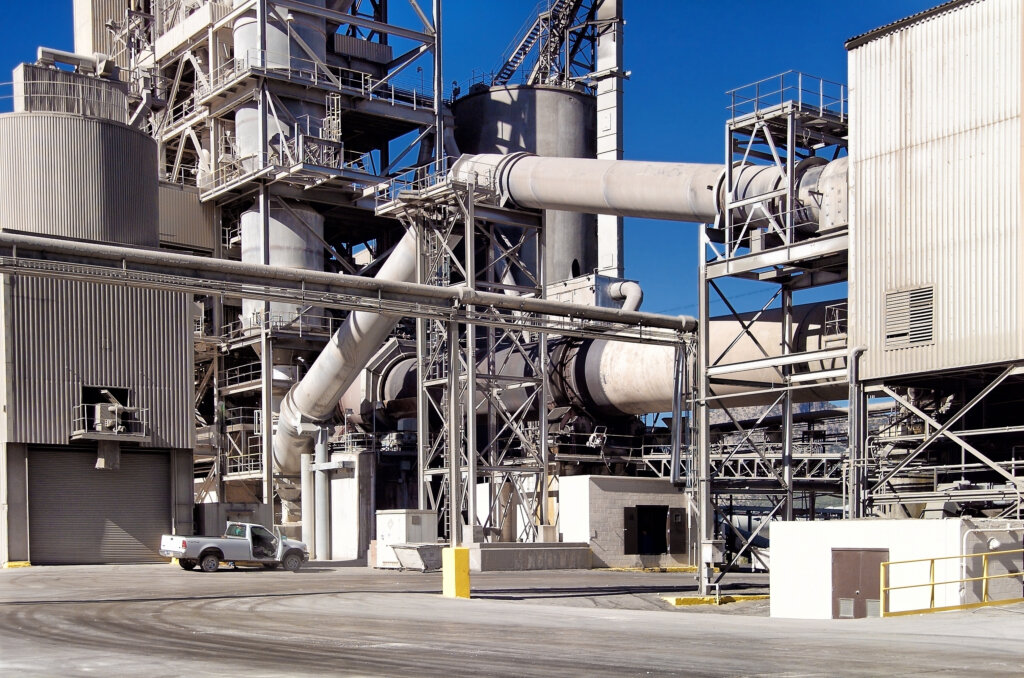
Rotary kilns, ball mills, clinker coolers, and heavy crushers get all the attention when people picture a cement facility. But the reliability of every one of those big assets depends on the smaller connective hardware running between them, and that hardware works a lot harder than it gets credit for. Valves sit at the top of that list. When a single isolation valve jams or a conveying line blows out, production stops cold, and in cement production and handling, where reliability engineers get measured on uptime, that gets expensive in a hurry.
Why Standard Valves Fail in Cement Plants
Standard valves fail in cement plants because abrasive particulates like clinker and cement dust score the seating surfaces, which causes leaks, jamming, and premature actuator failure. General service butterfly valves and ball valves were designed for clean liquid and gas applications, not for the abrasive, alkaline, particulate heavy environment of cement handling equipment.
Here is what happens when you close a standard ball valve on a flow of dry cement dust or clinker. The abrasive media gets trapped between the ball and the seating surface. As the valve actuates, it forces those hard particles directly into the seal. The seating gets scored, microscopic leak paths form, and the valve starts to pass. In the hot zones near the kiln and preheater, the combination of heat and fine dust also chews through any standard elastomers or soft seating materials you have in there.
The financial pain is bigger than the leak itself. As particulates build up and score the internals, the torque required to cycle the valve climbs. Actuators burn out early. Maintenance teams end up dealing with conveying line blowouts, plugged hoppers, and a constant cycle of reactive repairs that drains both time and budget.
Common Failure Points in Standard Cement Plant Valves
- Scored seating surfaces from clinker and cement dust trapped against the seal
- Elastomer breakdown in hot zones near the kiln and preheater
- Increased actuator torque leading to premature actuator failure
- Conveying line blowouts at weakened valve connections
- Plugged hoppers and dust buildup in valve bodies that do not self clean
Where Do Cement Plants Need Severe Service Valves?
A handful of high risk zones in every cement plant call for purpose built bulk material valves. Skip the upgrade in these spots and you set yourself up for the kind of downtime that shows up on a monthly report.
Pneumatic conveying equipment is the obvious one. Dense phase conveying lines move dry bulk at high velocity, and that turns cement dust into something close to a sandblasting force. Any weak point in the line gets destroyed. Valves in these systems need to hold their seal under constant friction.
Dust collection structures are another big vulnerability. Failure here is not just an operational headache. A leaking valve on a dust collection silo can mean hazardous atmospheric exposure, compliance problems, and a mandatory shutdown while you sort it out.
Batch loadout and dispatch areas need absolute shutoff. When you are handling abrasive fly ash or finished Portland cement during loading, a valve that does not close all the way means lost product, off spec batch weights, and a cleanup nobody wants to deal with. In high stakes spots like these, your valve selection effectively decides how efficiently the whole operation runs.
Critical Valve Locations in a Cement Plant
- Preheater isolation and kiln fuel feed
- FK pump isolation and FK pump crossover
- Silo diverters and cement kiln dust conveying
- Hood seal, clinker cooler, and cement cooler service
- Raw mill feed and finish mill feed
- Truck load out, railroad car unloading, and barge unloading
What Makes Rotating Disc Valves Better for Abrasive Dust?
Rotating disc valves outperform standard valves in abrasive dust because the disc rotates and shears material away from the sealing surface instead of compressing against it. The fix for abrasive wear is not a tougher version of the same design. You need a different mechanical approach. Severe service valves built around rotating disc valve technology handle dry, particulate heavy flow in a fundamentally different way. Everlasting Valve Company introduced the first self-lapping rotating disc valve in 1906, and it is still the benchmark for severe service applications.
Here is how it works. Instead of compressing against grit, the disc rotates as the valve actuates. That rotating, shearing motion wipes cement dust and clinker out of the way before it can get trapped against the seal. A spring loaded disc is held firmly against the path it travels, which gives you tight metal to metal contact and positive shutoff. The valve body itself creates a vortex that helps clear media during operation. Leak rates are less than the industry standard ANSI B16.34 and MSS-SP-61 requirements for metal seated valves.
The self-lapping action is the part that changes the economics. Every time the metal disc rotates against the metal seat, the two surfaces polish each other. So instead of getting scored and destroyed by abrasive media, the seal actually gets tighter the more you use it. Standard cement plant valves start degrading the day you install them. A self-lapping rotating disc valve wears in, not out.
How Severe Service Valves Improve Total Cost of Ownership
Severe service valves improve total cost of ownership by cutting downtime hours, reducing replacement cycles, and lowering ongoing maintenance spend over the life of the asset. The conversation needs to shift away from purchase price. In continuous manufacturing, the upfront cost of a valve is almost irrelevant compared to what an unplanned shutdown costs you.
Think about it this way. When a standard butterfly valve fails in a cement silo, the replacement unit might run a few hundred dollars. The real cost of downtime shows up in lost production for every hour the line is offline, plus the maintenance hours you spend draining the line, locking out the equipment, and swapping the unit. That is where the money actually goes.
Severe service rotating disc valves change the math. Everlasting valves have been deployed in cement, mining, and minerals plants worldwide for more than 50 years, and the design is built to stay in service rather than cycle through your maintenance budget. Equipment engineered for abrasive dry bulk solids turns a high maintenance bottleneck into an asset you stop thinking about.
Where to Start Your Reliability Upgrade
Upgrading critical valve positions delivers the fastest return where failures have historically caused production disruptions, or where valve access for maintenance is particularly difficult and expensive. Preheater and FK pump positions, cement kiln dust conveying, and silo diverters are usually the highest impact starting points.
Everlasting Valve Company builds rotating disc valves for cement production and handling, with proven application fits across preheater environments, FK pump isolation and crossover, clinker and cement cooler service, raw mill and finish mill feed, and truck, railroad car, and barge loadout. The design addresses the specific combination of high temperature, abrasive media, and high cycle duty that defeats conventional valve technology in these positions.
Contact us today to request a quote or talk through your application with our engineering team.
Frequently Asked Questions
The most common cause of valve failure in cement plants is abrasive scoring of the seating surfaces by clinker and cement dust. Standard valves trap these hard particulates against soft elastomers, which scratches the seat, opens leak paths, and eventually leads to mechanical jamming and actuator failure.
A self-lapping rotating disc valve uses a metal disc that rotates against a metal seat every time the valve actuates. The rotating motion shears abrasive media out of the way while the two metal surfaces polish each other, so the seal gets tighter the longer the valve runs.
Pneumatic conveying equipment in cement plants moves dry bulk solids at high velocity, which turns cement dust and fly ash into a sandblasting force. That constant friction quickly erodes any piping connection or valve seal that is not built specifically for severe service.
The best alternative to butterfly valves in cement silos is a severe service rotating disc valve. The rotating, self-lapping disc handles abrasive cement dust and clinker without scoring the seal, which means longer service life, tighter shutoff, and far fewer maintenance interventions.
Severe service valves cost more upfront but improve total cost of ownership by reducing replacement cycles and unplanned shutdowns. Over a multi year lifespan, plants save on lost production hours, emergency maintenance, and spare part inventory.